
How to Do Tasbih After Prayer — A Step-by-Step Guide
ou finish your salah, say the salam, and then pause for a moment, not quite sure what comes next. Sound familiar? A lot of people either rush back into their routine or sit quietly without knowing what to read. If that sounds like you, you’re not alone.
This guide will walk you through what to do after prayer, how to recite tasbih properly, and how to make it part of your daily routine. And if you ever lose track while counting, you can use a simple online tasbeeh counter to keep things easy and consistent.
What Is Post-Prayer Tasbih?
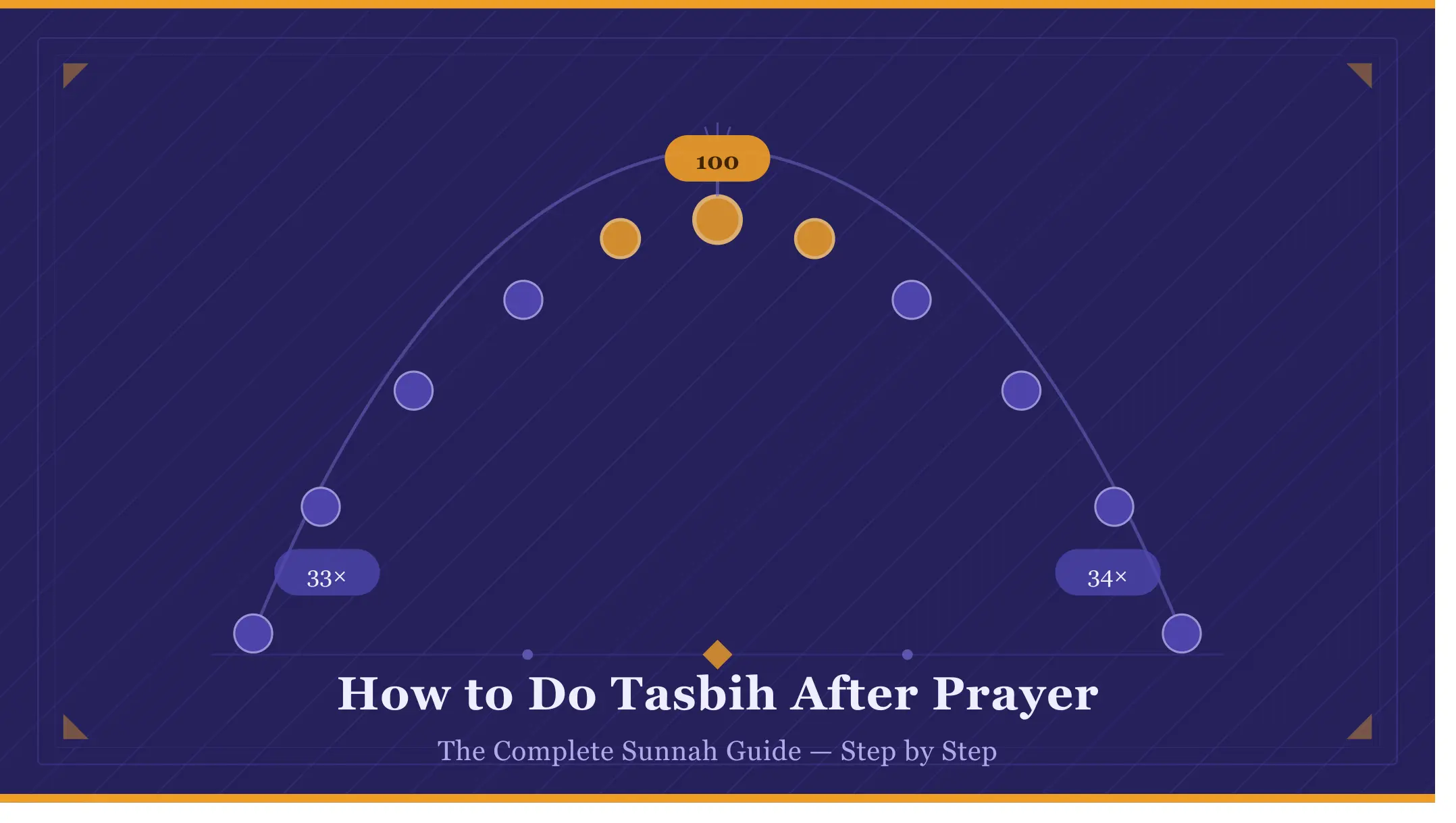
Tasbih after prayer refers to a specific sequence of phrases traditionally recited after each of the five daily salah. It’s built around three simple statements, each repeated a set number of times. The total comes to 100.
This practice is sometimes called Tasbih Fatimah because it was specifically taught to Fatimah (RA), the daughter of the Prophet ﷺ, as a gift to help her manage the demands of daily life. It’s been practiced by Muslims ever since.
The Complete Post-Prayer Tasbih — Step by Step
Step 1 — SubhanAllah × 33 سُبْحَانَ اللَّهِ “Glory be to Allah”
Repeat 33 times.
Step 2 — Alhamdulillah × 33 الحمد لله “All praise is for Allah”
Repeat 33 times.
Step 3 — Allahu Akbar × 34 اللَّهُ أَكْبَر “Allah is the Greatest”
Repeat 34 times.
That’s it. Three phrases, 100 total repetitions, under 3 minutes. This is one of the most complete and rewarding acts of worship you can fit into a small amount of time.
Why 33-33-34 and Not Equal Numbers?
The slightly unequal split — 33, 33, and 34 — comes directly from how the Prophet ﷺ taught this practice. The total of 100 is significant in Islamic tradition, and the 34 for Allahu Akbar brings the sequence to completion.
Don’t overthink it. Just follow the sequence as taught and trust the practice.
How to Keep Count Accurately
Losing track mid-way is one of the most common frustrations with tasbih. Here are your three options:
Option 1 — Count on Your Fingers
Use the segments of your fingers on your right hand. Each finger has three segments, so one hand covers 15 counts easily. Many scholars recommend this method as it was practiced by early Muslims.
Option 2 — Physical Tasbih Beads (Misbaha)
Traditional misbaha beads come in 33 or 99-bead strings. For the 33-33-34 sequence, pass through 33 beads for the first two phrases, then count 34 for the last. Simple and tactile.
Option 3 — Digital Tasbih Counter
If you’re on your phone after prayer, or if you prefer not to carry beads, a digital counter does the job perfectly well. Our free tasbih counter lets you tap to count without any login or download. Open it in your browser and start right after salah.
👉 Use the free Tasbih Counter here
All three methods are valid. Use whatever helps you stay focused.
When Else Can You Say This Tasbih?
The 33-33-34 sequence is specifically recommended after each of the five daily prayers. But these phrases carry value at any time.
Many Muslims also incorporate them into:
- Morning and evening adhkar sessions
- The time before sleeping at night
- During idle moments throughout the day — waiting in a queue, commuting, or in between tasks
The more often you say them, the more natural they become. Eventually, they stop feeling like something you “do” and start feeling like how your mind naturally settles.
What to Do After the 100 Count
Some scholars recommend ending with a short phrase after completing the 100:
“La ilaha illallah wahdahu la sharika lah, lahul mulku wa lahul hamdu wa huwa ala kulli shay’in qadir”
(There is no god but Allah, alone, with no partner. To Him belongs all dominion and all praise, and He has power over all things.)
This isn’t obligatory, but it’s a beautiful way to seal the dhikr before moving into your day.
Tips to Make Post-Prayer Tasbih a Habit
Stay seated for a few minutes after salam. The moment you stand up and move, the intention to do tasbih often evaporates. Give yourself 2–3 minutes right after finishing prayer before doing anything else.
Use the same method every time. Whether it’s fingers, beads, or a digital counter — consistency removes friction. When the method is automatic, you can focus on the meaning instead of the mechanics.
Start with just one prayer a day. If five prayers feels overwhelming right now, commit to doing the tasbih after just one — Fajr or Maghrib work well. Build from there.
Don’t rush. Say each phrase at a pace that feels intentional. This isn’t a race to finish 100 counts as fast as possible. The goal is presence, not speed.
FAQ
Q: Is post-prayer tasbih required? No. It’s a highly recommended Sunnah, not a fard (obligation). But given how short it is and how much reward it carries, it’s one of the easiest habits to build into your salah routine.
Q: What if I forget to do it right after prayer? Do it when you remember. The ideal time is immediately after salam, but doing it a short while later is still beneficial.
Q: Do I say it out loud or silently? Either is fine. Some people prefer to say it quietly under their breath; others say it fully silently. Follow what feels most focused for you.
Q: Can I do the tasbih in a different order? The recommended order is SubhanAllah first, then Alhamdulillah, then Allahu Akbar. It’s best to follow the sequence as taught.
Q: Is a digital tasbih counter okay to use? Yes, completely. The method of counting doesn’t affect the validity of the dhikr. The words and the intention are what matter.