10 Real Benefits of Dhikr — Why Remembering Allah Changes Everything
You’ve probably heard that dhikr is good for you. But when someone says “just do more dhikr,” it can feel a bit vague — easy to say, but harder to stick with in daily life.
So let’s make it practical. What does dhikr actually do, and what really changes when you stay consistent with it? Even using a simple online tasbeeh counter can help you build that habit without losing track.
Here are 10 real, well-known benefits of dhikr in Islam — the kind that affect your heart, your mindset, and your everyday routine.
1. It Brings Genuine Peace to Your Heart
This is the one most Muslims feel first. There’s something about repeating Allah’s name — or saying SubhanAllah over and over — that genuinely calms the mind. Not in a suppressing-your-feelings way. More like… things settle.
Stress doesn’t disappear. But your relationship with it changes. Dhikr doesn’t solve problems — it changes the person facing them.
2. It Reduces Anxiety and Worry
A lot of anxiety comes from feeling out of control. Dhikr is a reminder that you were never supposed to be in control of everything — and that the One who is in control is fully aware of your situation.
That shift in thinking is powerful. Regular dhikr creates a mental pause in the middle of a busy, anxious day. And those pauses add up. Over time, people who practice dhikr consistently tend to carry less ongoing worry.
3. It Protects You from Negative Thoughts
A mind filled with remembrance has less room for doubt, despair, and temptation. This isn’t just a spiritual idea — it’s practical. When your default response to difficulty is a phrase of remembrance rather than panic, your thought patterns gradually change.
Dhikr works like a filter. The more you use it, the cleaner the mental space becomes.
4. It Keeps You Connected to Allah All Day
Salah happens five times a day. But life happens every minute. Dhikr is the bridge between your prayers — the thing that keeps your heart from completely disconnecting between Fajr and Dhuhr, or between Maghrib and Isha.
Without that bridge, it’s easy to feel like your spiritual life is something you do at prayer times and then set aside. With dhikr, Allah stays present throughout your day, not just in the moments you designate for worship.
5. It Strengthens Your Imaan
Faith isn’t a fixed thing. It rises and falls based on what you’re doing, thinking, and exposing yourself to. Consistent dhikr is one of the clearest ways to keep it rising.
Every time you say Allahu Akbar and mean it — even slightly — your belief gets reinforced. It’s a small act, done repeatedly, that compounds over time into something much stronger.
6. It Purifies the Heart
Pride, envy, anger, resentment — these are spiritual diseases that build up quietly. Dhikr doesn’t make them disappear overnight, but it does create the conditions for them to weaken.
When your heart is regularly directed toward Allah’s greatness, your own ego naturally shrinks. Gratitude replaces entitlement. Humility replaces arrogance. It’s a gradual process, but dhikr is one of the primary tools for it.
7. It Brings Barakah Into Your Time
This one surprises a lot of people. Many Muslims notice that days filled with dhikr feel more productive — not because they did more, but because what they did had more weight and flow to it.
Barakah (blessing) in time is real. And consistent remembrance of Allah is one of the ways to invite it. The idea isn’t that dhikr magically adds hours to your day. It’s that Allah blesses the time you have when you spend it in His remembrance.
8. It Makes Difficult Moments Easier to Bear
Everyone goes through hard stretches — loss, uncertainty, frustration, grief. In those moments, having a practice you can return to is invaluable.
Dhikr doesn’t minimize pain. But it gives you somewhere to put it. Saying SubhanAllah in a moment of hardship is an act of trust — a statement that you believe Allah is aware, even when circumstances feel out of hand. That trust is its own kind of relief.
9. It Creates a Sense of Spiritual Purpose
One of the quiet benefits of dhikr is that it gives your day a thread of meaning running through it. You’re not just working, eating, and sleeping. You’re also worshipping — in the car, in the kitchen, in the in-between moments.
That changes how an ordinary day feels. The mundane becomes meaningful. Not in a dramatic way — in a quiet, steady way that builds over weeks and months.
10. It’s the Easiest Form of Worship Available to You
No timing requirements. No preparation. No special place. No specific language for beginners. You can say SubhanAllah right now, in this moment, wherever you are.
For how much reward it carries, dhikr is arguably the most accessible form of worship in Islam. That’s worth taking advantage of — especially on days when other acts of worship feel out of reach.
How to Start Today
Pick one phrase. Say it 33 times. Use our free tasbih counter so you don’t have to worry about keeping count.
That’s your starting point. Build from there.
FAQ
Q: How quickly do you feel the benefits of dhikr?
Some benefits — like a sense of calm — can be felt almost immediately. Deeper changes, like strengthened faith and a purified heart, build gradually with daily consistency.
Q: Can dhikr help with anxiety?
Yes. Many Muslims find that structured, repetitive dhikr — especially during stressful moments or before sleep — significantly reduces anxiety over time. The act of focusing on Allah’s names redirects the mind away from worry.
Q: Which dhikr phrase should I start with?
Any of the four core phrases work well: SubhanAllah, Alhamdulillah, Allahu Akbar, or Astaghfirullah. Start with whichever feels most natural to you. There’s no wrong choice.
Q: Is using a tasbih counter to track dhikr acceptable?
Yes. Using a physical misbaha or a digital tasbih counter to maintain your count is a widely accepted practice. The tool supports your focus — it doesn’t replace the worship.
Q: Do I have to say dhikr out loud?
No. You can say it quietly, in a whisper, or silently in your heart. All forms are valid.
👉 Read more:
- Not sure where to start? Read what is zikr and why it matters
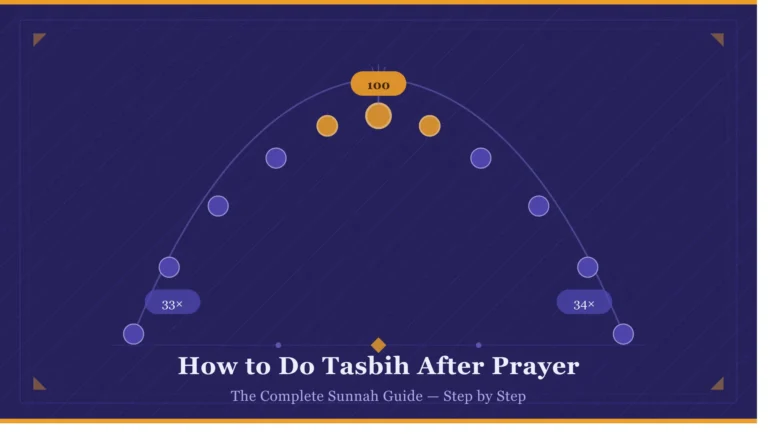
- Learn the proper way of tasbih after prayer (33, 33, 34)
- Use this online tasbeeh counter to keep track of your daily zikr